

"There often is a heart throbbing sensation felt by
most physicians after they retire from their medical practice
that is persistent. They feel a need to have medical patients
continue to depend on them and they sometimes believe
that they have wasted their skills, medical knowledge, and
obligation to make full use of their medical practice career
until they are unable to do so. It becomes a mental barrier
to retirement that they can't shake off."
Retirement is an option, not a goal.
For highly competent intelligent physicians who have spent a lifetime intensively engaged in curing sick and injured patients during their medical career, retirement is a quick overrated substitute for, and compromise of, everything you found to be extraordinarily fulfilling.
The exceptions to the usual retirement activities of resting, sleeping, and eating are the physicians who somehow find a means to use all that brilliance stored-up education, knowledge, and skills in ways that continue to be fruitful and satisfying. However, it goes far beyond that.
What happens to you in retirement affects everyone around you. Your family wants you to be happy and satisfied during retirement while spending most of your time interacting with them. Friends and family have great difficulty understanding what happens when a fish is pulled out of the water, or a doctor who can no longer offer their expertise daily to those in need.
You spent years developing that mindset and now you’re expected to disregard that mindset--
like overnight?
The happiest retirees are the ones who pretend to retire and yet continue in some fashion to use their elite talents and knowledge for the benefit of the national healthcare needs. The desire to teach, write about, or lecture on topics of interest regarding healthcare are just a few of those avenues for continuing to benefit society.
I believe most medical doctors do these things during their “pretend” retirement from medical practice as long as they are in good health.
The fact that the practice of medicine is rapidly changing from practice freedom to practice dictation leaves little room for control of your own medical career. This transformation has created every possible factor for physicians not to retire at all. Obama promised it and we got it.
Retirement from medical practice today (2022) is not a realistic choice because physicians have been selectively cornered with very few alternatives left to consider.
Some reasons why it’s smart to consider not retiring voluntarily...
1. Most important and quite convincing are the issues relating to financial problems. It’s likely today that the great majority of physicians across our nation and in medical practice today have not been able to fully fund their retirement plans, if they have one at all.
Physician's net incomes have been dropping persistently over the last 20 years, some specialties more than others. Studies and surveys document the fact.
Physicians are having great difficulty affording to send their kids to college, at least to the preferred and elite ones. It means that physicians have to spend a stack of money to finance college education for their kids. Maybe also support their young people who have to move back into mom and dad’s home.
Many medical practices are now financially in trouble and many are closing completely
every week.
What medical doctor can handle all their increasing financial obligations today if they retire from their medical practice income source?
2. With a divorce rate approaching 50% among physicians, who can predict what this secondary financial settlement agreement won’t allow room to pay for other medical practice needs? Every private medical practicing physician knows about at least 5 that have become victims of
that circumstance.
The divorce settlements are becoming increasingly steep and often leave the doctor permanently stuck in debtor’s prison. I’m sure all of you have known doctors in such a predicament. Many because they forgot to create a prenuptial agreement with their second or third wife.
The alternatives to avoid this dilemma are few and still can be a source of financial problems...
A. Never get married
B. Marriage between doctors.
C. Marriage between two who are both
professionals in their own right.
D. Prenuptial agreements.
3. Medical malpractice premiums continue to rise. So while you are smart to have such coverage, you will remain in an escalating bind as your practice income decreases.
Medical malpractice risks won’t go away after retirement. In some cases the claims may still be viable for 20 years--statute of limitations. Probably the other 43 states without a cap on court medical malpractice jury verdicts will continue indefinitely.
Most doctors never consider that there are other even more devastating catastrophes that result from malpractice cases that get settled with or without jury verdicts. Things like inability to get malpractice insurance or can buy it at exorbitant premiums, are not rare. Reputation ruined, no referrals anymore, constant supervision by peers, medical board punishments, are just a few more.
4. Doctors who suffer health catastrophes as a younger person are left wanting. Automobile wrecks, plane wrecks, climbing accidents, spinal artery clot causing paraplegia, cerebral artery block causing hemiplegia, kidney failure, heart attacks with bypass surgery and loss of vision, are a few wake-up calls that I have witnessed among my peers.
The first three involved the death of the doctors. Doctors may be the only bread winners as these were. It left those families desperate for help, suddenly. The climbing accident was a doctor (cardiac surgeon) and wife when they fell 3000 feet off of the mountain called K1.
5. Inadequacy of retirement funds may become a factor. Does your retirement account have enough in it to manage and pay for elder care of your parents?
Because of the decrease in quality of medical care, which will get worse over time, it is
expected that physicians will become much more involved in paying for better care for their parents and families than ever before.
Children become disabled, get cancer, and suffer from permanently disabling diseases. Often, these occur suddenly without any predictability.
6. For serving a long career in medical practice, long hours, up nights, emergencies, and unlimited compassion always in demand, retirement means incredible boredom, inactivity, and brain drain.
Those three things alone can easily put any physician into depression, perpetual worry and regret, and ignite a sense of worthlessness that can’t be described. It’s what happened to me when I first quit medical practice.
That’s the time when doctors discover how to pretend to be retired while going on to use their medical knowledge and talents for good. It brings back self-satisfaction and self-esteem.
7. From a purely fulfillment perspective physicians as a whole do better in their lives when they are busy, face diagnostic challenges daily and routinely see patients they have treated surgically and medically successfully. It may be a self-esteem builder effect that you still “have it” after
all these years.
There’s something that happens during that doctor-patient interaction that excites your soul and confirms your value both to yourself and the patients you manage. It’s something you may find at home but it isn’t the same and may not be as important to you.
Once you’ve had the experience of practicing medicine and experienced the rush of passion for curing medical patient problems, it’s something that’s hard to give up.
8. The continuous implementation of new surgical and medical procedures and the impressive new technology leading to those improvements in treatment are factors that one never gets tired of. It feels good to be part of the forefront of medical care. You're doing it, not watching it.
Competition in healthcare is a stimulant every bit as effective as it is in sports and in education. It fuels your passion to do more with your skills and do better than others. Of the hundreds of doctors in your community, each one has one or two areas of expertise that is above that of all others. Retirement can ruin your passion and motivation to always be ready for the next step up.
9. Each premed student at the start has a head full of ideas about the practice of medicine and how they will fit into that career. What seems to happen unconsciously during medical school is for each student to build the essentials of medical practice around their own personality, interests, and visualized goals. You grab what your intuition tells you that you need.
You gather the parts of your medical education and training experiences that fit into your visualized future. You use them to fit together an invisible support system for the kind of doctor you
intend to be.
You do the molding of your image yourself. You feel the ingredients you need to be that doctor. It makes you unique among physicians.
When you’re finished with the process, all you have left to do during your medical career is hone your potential down to a sharp focused edge. That person is who everyone in medicine around you, including your patients, sees and reacts to.
The doctor you build yourself into is exactly what makes it difficult to quit the medical profession or retire, especially when you know you are the best doctor that ever came out of medical school in the last century… right?
You did such a terrific job building that doctor’s character, integrity, and reliability, who’d want to throw that doctor away by retiring?
Comments
One of the things I regret the most after I pretended to retire in 1999 was the fact that I would never have to maintain a medical license again. My absent mindedness was camouflaged by finally being able to get out of the medicine rat-race--the specialty with the highest malpractice risk rate.
I knew that I would never again practice medicine by the way I felt at the time, so I was cutting all ties to the career. About two years into my retirement I had this great urge to teach at the medical school nearby. I didn’t recognize that teaching medical students or residents required an active medical license--lack of due diligence. But that wasn’t all.
When I inquired about obtaining a medical license in Nevada from the Medical Board (I had several inactive medical licenses in other states) I was told it would be a waste of time for me to even try. As an OBG with malpractice suits on record (regardless of the outcomes) I didn’t stand a chance. I should have picked another state to practice in early on instead of “malpractice risk heaven” in California. I suffered from lack of due diligence.
Since I had no active license in any other state it limited my options to doing a residency over again, go through the torture of activating a medical license in one of the states where I was licensed and kept inactive, or taking the state licensure exams required by most states when one has no active medical license anywhere for over 2 years. For family reasons, we were stuck in Nevada caring for two grandmothers.
My intention to share my years of medical practice experience in OB-Gyn with medical students was foiled. It’s such a waste of medical knowledge to let it all go to the wind.
My intention to share my very advanced surgical skills with residents was foiled. Surgery was my one special area of expertise, talent, and skills in my career and I was far ahead of most other OBG medical doctors in my specialty at the time.
Lastly, in this new generation of medical practice where doctors are being inhibited in so many ways and quitting practice in droves, one would think that the attrition of doctors would demand new looser rules for medical practice licensure and private medical practice. That is happening
today, 2022.
In contrast to the restrictions that retirement activates as noted above, all physicians who are still in medical practice have at least one guaranteed means of increasing their practice income not by working harder, but by working smarter. And the way to do that is by following the essential elements of all successful businesses in the world today, such as...
Requirements for maximizing your medical practice income
1. Good knowledge of medical practice management
2. Having the energy for continuous medical practice marketing
3. Medical practice business planning is important.
4. Marketing for physicians and their office staff is a winning set up.
5. Learn what makes a medical practice business successful.
6. Your medical practice business system is essential.
7. Bothe practice marketing and physician marketing is rewarding.
8. Business success is the objective of all physicians in private medical practice.
9. My business website—www.marketingamedicalpractice.com
----Professional Probe----
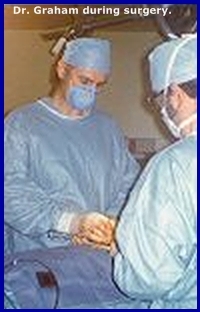
"My time spent in surgery and the subspecialty
elements of advance surgical procedures was by far
my most fulfilling, satisfying, and inspiring parts
of my private medical practice career."
Articles©2013-2022/CGG INVESTMENTS LLC. All rights reserved. #96, 3-16-22
