

"Copywriting expertise is the tool required to
make marketing efforts highly profitable to
physicians in private medical practice."
The epitome of arrogance is to believe that you know how to use the English language words and word priorities well enough not to need any further “learning.” The copywriting industry across the world has become a unique method of communicating with potential customers or medical patients in a manner that reveals, excites, inspires, offers benefits, and convinces anyone who reads the marketing message words that they have found the perfect solution of their problem, or healthcare issue in this case.
The English language of copywriting is not a natural manifestation of your of your IQ or inherited intelligence. Copywriting is a talent you have to learn and work at to even begin to influence people and persuade their desire for compliance to our invitation or offer. That’s why advertising giants like David Ogilvy, Rosser Reeves, John Caples, Claude Hopkins, and Dan S. Kennedy, among many others, made the millionaire list over the past century.
For many it’s difficult to think that the aroma from reading written information is interpreted the same way and has the same meaning by everyone… just put the words in a format to be read and any moron will believe what is written there or spoken there. If that were true, the marketing empires would disappear overnight. It's a form of brainwashing that is subtle enough, passive enough, and inspiring enough to convince a percentage of people that everything the message describes is more than a solution to their problem, but a guarantee of the offer's effectiveness.
Because copywriting and marketing hasn’t disappeared in the past 100+ years, it means that the manipulation of what is said and how it’s laid out creates the degree of depth, influence, and attraction it has to all readers… you already know this… but you seldom take it seriously for your own benefit.
Most of you have a general idea what copywriting really is, but can you define it specifically?
The best definition can be found on the American Writers and Artists Inc. website, www.awaionline.com...
So what is copywriting?
Copywriting is the process of writing advertising promotional materials. Copywriters are responsible for the text on brochures, billboards, websites, emails, advertisements, catalogs,
and far more--such as video commercials you watch and are inspired by.
This text is known as “copy.” Copy is everywhere— it’s part of a $2.3 trillion industry worldwide.
Unlike news or editorial writing, copywriting is all about getting the reader to take action. That action might be to purchase, opt-in, or engage with a product, service, or company.
That’s why a copywriter is often referred to as “a salesman in print.”
Copywriting should not be confused with “copyright.” Copyright means an individual or
company has the exclusive legal right to reproduce, publish, sell, or distribute someone’s work (such as books, music, artistic items).
The purpose of a copyright is to protect that material and prevent illegal use of it by unauthorized agents. The owner designates the material is copyrighted with the symbol ©. America’s writers and artists, Inc. www.awaionline.com
If you are involved in any promotion of your own medical practice, advertising in the phone book where patients can find you, or marketing your medical practice for the purpose of increasing your new patient population, then you should have a reasonable knowledge of how to present that information in a very persuasive and effective manner.
There are numerous ways to do that profitably. However, there are many other ways to make the words and content destructive to your practice business, which you must avoid at all cost.
The same holds true for the content of your medical website, patient medical information handouts you write, and your email messages to others… even love letters that will draw-in that soul-mate. Because you are attempting to get people to take action on something through written, verbal, or video information, your ability is may be limited to written “descriptions”to get the proper
point across--like actors read or say in movies.
Since you are not present when your message is read, the other elements of good communication are absent--like body language, tone of words, and facial expression, which creates a big disadvantage to your intention and message. You have to make up for that by learning copywriting.
When communicating person to person you have the added effects of your body language, voice tone, and surrounding environment control, which you don’t have in written communication.
Thus, you must rely on persuasive word-use to do it all. The more you learn about good copywriting, the better you will learn to use those same tactics in person to person communications that makes you more effective as a leader, influencer, and speaker as well as a much better physician giving advice to patients, saying it in ways that don't upset a patient, and expressing the message in a more understandable manner. See--you have just become a more valuable physician.
Your effectiveness while communicating with any written or printed document depends on many things. If you have had an especially good education in grammar, sentence structure, and vocabulary, you have barely touched the surface of getting the attention of the respondent, let alone trying to influence them to do something for you or with you.
Some good examples will help excite your axons and dendrites, even make your synapses snap to attention. One needs to start by getting the attention of the reader somehow.
How to grab reader’s attention…
Lesson-1: Nothing is more critical to any written message than the subject line or title. Robert Collier said, “Remember, you are entering the conversation already occurring in the reader’s mind.” It’s the first barrier to be overcome in any communication with others, whether written or spoken. You must pierce that person’s train of thought to get their full attention.
Before you can obtain or even expect any reaction to your written communication, you have to get the respondent to open the envelope and/or read the subject line first. The reason this is most important is because nothing happens if the written communication is deleted and/or dumped into the circular file without being read.
Present day “busy-ness” is a significant obstructive issue today in all communications. Most email inboxes are loaded with messages, commonly 50 to 200 per day. Open rates for emails messages are normally below 20%.
It means you have to have an exciting, teasing, and interesting subject line that anyone can’t resist opening and reading. Otherwise, only one out of five will ever read your message. Even the one in five may just scan the message and miss your real message.
For documents and letters, personal or business, the first paragraph serves the same purpose. It brings the reader from the subject line/title to the first paragraph to make their decision whether to continue reading or not. The trick is to make each paragraph interesting enough or important enough to continue reading the next paragraph… and all the way through every paragraph
in the message.
The thread of the theme must lead readers down the page by making one point made there to fit into the next point found in the next paragraph. It seems easy, but it requires a good deal of thought to organize the process well enough to get what you want from the reader.
You can reduce the mistakes that sometimes unconsciously are made, that can suddenly make readers stop reading, by…
· Writing or speaking in a passionate manner, excited
tone, and sincere voice avoids boring people.
· Make all communications as short as possible…
even to friends. Honor their time as well as your own.
· Don’t ramble off topic.
· Never make a greeting more than one short line
(6 - 10 words range).
· Always make the first sentence on your page contain
words that indicate that it is all about them, not you
or what you want. The words most useful are“you”, “your”, etc.
· Don’t add in examples unless you need them to reinforce
your point and that you can’t put into the right combination
of words.
· Don’t B.S. people… most readers will immediately
recognize when you try to bullshit them.
· Don’t lie because most readers who read your stuff
will eventually know when you do.
· Quotes from other experts show readers that you
read a variety of information, value what others
have said, and understand what the quote can do
for your readers as well.
· Learn the difference between “features” and“benefits”
–often described in the MBA Magazine as… “People
want quarter-inch holes, not quarter-inch drills.”
Top producing classes of headlines are…
The most influential headlines that attracts the most readers today can be grouped into three categories…
1. Ones that benefit the reader the most: These are the most effective headlines. It’s a
self-interest issue where the solution to the reader’s problem hits home. It targets that
person’s immediate needs or wants.
2. News being provided is new and exciting: Number two in effectiveness are those
headlines that focus on providing readers information about new discoveries, new
products or services, and uncovers new news that hasn’t reached the general public yet.
3. Curiosity provides a challenge to be satisfied: The third most effective headlines that leave
your mind wondering what lies behind to headline, often those that trigger the mind
to demand answers.
What great copywriters think about headlines…
With the Internet available today we are left with two dilemmas. First, it used to be that headlines were designed to attract readers.
Second, the Internet has created a conflict. For Internet publication, titles and headlines are required that contain keywords, thus often designed for SEO (search engine optimization). Combining the two issues is much harder to do, at least if you want to get your materials,
copy, and information read.
David Carr (New York Times)… “Keep in mind that all of the things that make headlines meaningful in print –photographs, placement and context—are nowhere in sight on the Web."
Gabriel Snyder (exec. Editor newsweek.com)… headlines are… “naked little creatures that have to go out into the world to stand and fight on their own.”
Harry B. Walsh (freelancer)… " keep headlines under 15 words"
Denny Hatch (author and target marketing consultant)… “ Headlines up to 14 words are read equally as well as the shorter ones.”
David Ogilvy (Marketing copywriter)… “Long headlines sell more merchandise than short ones.”
Headline Rules (by Denny Hatch)
1. Put headlines below any illustration or photo
2. Don’t use puns—George Duncan
3. Don’t ask questions in teasers and headlines that can be answered yes or no—
George Duncan
4. Avoid the hard to understand headline—John Caples
5. Never run an advertisement without a headline—David Ogilvy.
6. The headline selects the reader—Axel Anderson
7. Your headline should telegraph what you want to say—simply. Readers do not
stop to decipher the meanings of obscure headlines.—David Ogilvy
8. On average, five times as many people read the headline as read the body copy.
When you have written your headline, you have spent 80 cents out of your
marketing dollar.—David Ogilvy
Every expert copywriter agrees that the effectiveness and persuasive power of the headline or title is the one and only factor that determines the full impact it makes on a reader’s decision to read further down.
It’s not the fancy text, the background images, or colorful splendiferous format that it’s presented in that determines whether a person will stop and read the full message.
One of the most impressive lessons that I found most enlightening and useful was the science and research of the human eye scan pattern. It has everything to do with the structure and design of your website attention-getting quality. That’s why the opt-in form is normally on the right side at the top of the page and above the fold.
Most scanners begin at the top left, then cross to the right side at the top, drop down a notch and do the same. All of the important points you want readers to see and to decide about seeing more of your site during that 8 second moment of time has to be above the fold.
The fold is where the website on the PC screen disappears off the bottom of the screen. It’s the screen that shows up when you click on the URL of the site. If the facts and right info are not seen by the viewer instantly on that screen they will leave—they won’t scroll down.
I may be able to make a descent copywriter out of you yet. At least, you will be able to use this information for the rest of your life to make yourself look good to others who read
your material.
(Part 2—next article will describe the importance of the subtitle and the first 10 lines you write at the beginning of your message.)
This bonus bit of copywriting below is to prove to you that the author wrote this article to make you a better marketer, and hasn't deviated from the important medical practice business management and medical practice marketing.
Requirements for maximizing your medical practice income
1. Good knowledge of medical practice management
2. Having the energy for continuous medical practice marketing
3. Medical practice business planning is important.
4. Marketing for physicians and their office staff is a winning set up.
5. Learn what makes a medical practice business successful.
6. Your medical practice business system is essential.
7. Bothe practice marketing and physician marketing is rewarding.
8. Business success is the objective of all physicians in private medical practice.
9. My business website—www.marketingamedicalpractice.com
----Professional Probe----
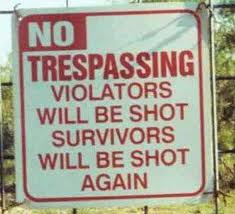
"Line one headline gets your attention."
"Line two explains the consequences of the violation."
"Line three explains what happens if you violate the first two."
All completed using only 11 words.
Articles © 2013-2022/CGG INVESTMENTS LLC. All rights reserved. #59, 3-16-22
